Telegram is no longer a niche messenger for early adopters. According to Telegram’s official FAQ, it is one of the top five most downloaded apps in the world. It supports groups of up to 200,000 members and channels for unlimited audiences, which is exactly why serious marketers, media teams, creators, and community managers now need better analytics than a simple post-view counter.
The problem is that most “best Telegram analytics tools” lists mix together four very different jobs:
- Owned-channel analytics for your own Telegram channel or group.
- Public-channel intelligence for competitor research and media buying.
- Community analytics for groups, moderation, and member activity.
- Mention monitoring for brand reputation and social listening.
That distinction matters because Telegram analytics is not one category - it is a set of different tool classes built for different decisions. In this article, we separate them on purpose:
- Channel and competitor analytics - Telegram native analytics, TGStat, Telemetr, Popsters
- Group and community analytics - Combot, TeleMe, Metricgram
- Brand and mention monitoring - Brand24
- Broader social analytics platforms where Telegram is only one channel - LiveDune
Once you look at the category this way, the market becomes much easier to understand. The tools below are not interchangeable, and the “best” option depends first on your use case, not on brand recognition alone.
Disclosure: this article was prepared by the MangoAds editorial team. The author, Sara Al Mansoori, is an AdTech Strategist at MangoAds. MangoAds is included in this comparison only where relevant and is treated separately as an execution and monetization platform, not as a primary Telegram analytics tool.
How We Evaluated The Tools
A good Telegram analytics tool should not be judged only by popularity or interface quality. For this review, we assessed every platform against seven practical criteria: data access model, freshness and historical depth, attribution capability, anti-fraud signals, export/API readiness, privacy risk, and support. This approach makes the comparison more useful for marketers, creators, media buyers, and community teams because it focuses not just on features, but on operational value.
When I evaluate a Telegram analytics platform, I do not start with charts - I start with the data access model. If I do not understand where the numbers come from, I do not trust the conclusions.
Sara Al MansooriAdTech Strategist at MangoAds.
Otherwise, a useful Telegram analytics stack should help you answer at least one of these questions:
- What is happening in my own channel? You need growth, views, shares, reactions, language splits, source graphs, and post-level performance.
- Which public channels are worth watching or buying ads from? You need historical growth, reach proxies, citation or mention data, posting frequency, and ad-efficiency signals.
- What is happening inside my community? You need message volume, active users, moderation events, spam control, top contributors, retention, and admin workflows.
- What is Telegram saying about my brand? You need keyword tracking, mention volume, sentiment, alerts, and trend analysis across public channels.
Quick Comparison: The Most Useful Telegram Analytics Tools in 2026
The table below compares the most useful tools across different Telegram analytics categories. It is not a single ranking from best to worst - it is a practical shortlist organized around different jobs.
|
Tool |
Best for |
What it does well |
Main limitation |
|
Telegram native analytics |
Owners of channels and supergroups |
Native stats on followers, views per post, shares per post, enabled notifications, source graphs, language graphs, and recent post interactions |
Only for admins; not designed for broad competitor research or media buying |
|
TGStat |
Public-channel research and ad planning |
Huge catalog, rankings, citation index, ad-efficiency views, post search, monitoring |
Best for public intelligence, not for private community management |
|
Telemetr |
Deep public-channel and ad-market intelligence |
Rankings, post search, ad-creative intel, keyword monitoring, fraud-related signals, API access |
More research-heavy than beginner-friendly |
|
Combot |
Large Telegram groups and moderation-heavy communities |
Group analytics, spam protection, trigger system, scheduled announcements, reputation tools |
Not the best fit for channel benchmarking |
|
TeleMe |
Group management with member-level oversight |
Group analytics, member management, team collaboration, anti-spam, scheduled tasks |
Built around groups, not public channel intelligence |
|
LiveDune |
Teams managing Telegram alongside other social channels |
Post analytics, comparison, KPI tracking, reporting, comments workflow |
Telegram data is limited by platform availability; some reach-based metrics are more limited for external accounts |
|
Popsters |
Content benchmarking and competitor content analysis |
Compare up to 10 public channels, study content formats, export reports |
Focused on content performance rather than community ops |
|
Brand24 |
Brand monitoring and reputation tracking on Telegram |
Tracks public Telegram mentions, sentiment, discussion spikes, alerts, competitor projects |
Not a classic channel analytics suite |
The Best Telegram Analytics Tools
Telegram Native Analytics
Telegram’s built-in analytics is still the best place to start if you manage your own channel or group. For most owners, the simplest way to use it is directly inside the Telegram interface: you can quickly review follower dynamics, views per post, shares, notification activity, traffic sources, audience languages, and recent post performance.
One nuance is worth keeping in mind: while most owners simply check stats in the Telegram app, not every channel or group gets the same level of analytics by default. In practice, access to advanced statistics can depend on the chat type and Telegram’s current logic.
The native dashboard is the clearest source of truth for your own channel or group. Before you pay for any third-party platform, check whether Telegram’s built-in stats already answer most of your questions.
Best for:
- Channel owners who want first-party performance data.
- Teams validating what actually happened after a post or campaign.
- Creators who care about source-of-growth and language breakdowns.
Not enough for:
- Cross-channel competitor research.
- Ad placement discovery.
- External mention tracking.
Why it still matters
The native dashboard is the clearest source of truth for your own channel or group. Before you pay for any third-party platform, check whether Telegram’s built-in stats already answer most of your questions.
TGStat
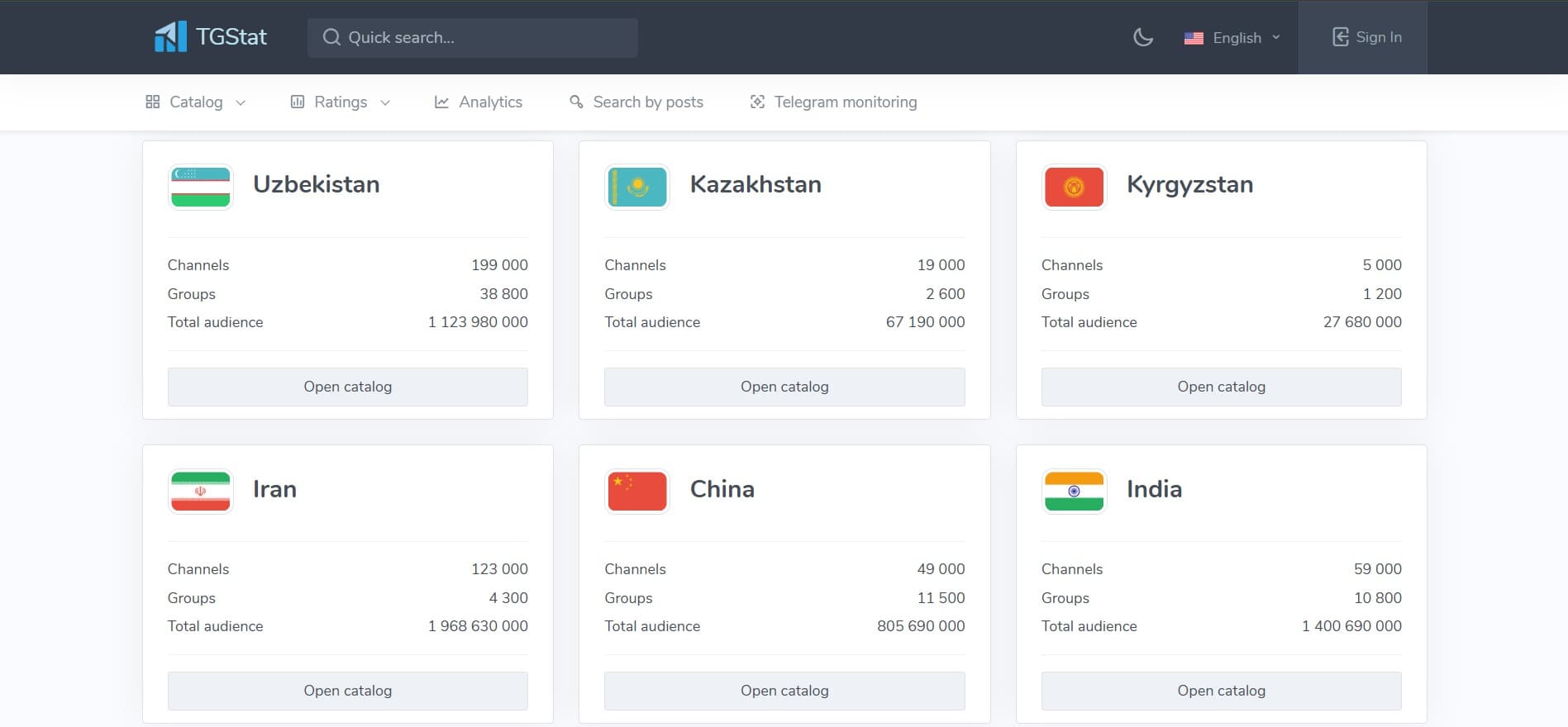
TGStat remains one of the most useful platforms for public Telegram intelligence. Its public materials and current roundup coverage point to the same core strengths: a large channel and group catalog, rankings by category/language/region, citation index, post search, ad-efficiency views, and monitoring/alerts.
- Data access model. Public-channel and public-group intelligence first. TGStat is strongest for market research, rankings, citation mapping, and competitive analysis rather than admin-level first-party analytics.
- Freshness and historical depth. Strong for public trend analysis. TGStat tracks growth, reach, citation, post performance, and popularity over time; premium sections extend historical analysis for attracting subscribers, top posts, and more.
- Attribution capability. Moderate. It is useful for post-level reach, mentions, citation flows, and invitation-link analysis, but it is not a downstream conversion tool in the performance-marketing sense.
- Anti-fraud signals. Moderate. TGStat exposes useful anomaly clues such as citation patterns, growth dynamics, verified channels, and filters for scam/fake marks, but it does not position itself as a dedicated anti-fraud stack.
- Export/API readiness. Strong. Paid users get Stat API, Search API, and Callback API access, and some premium sections support Excel export.
- Privacy risk. Low to moderate. In most research workflows, TGStat relies on public Telegram data; operational risk increases if a team connects account-level features or handles API credentials carelessly.
- Support. Good. TGStat surfaces a help center, support email, companion bots, and a fairly broad product ecosystem around monitoring and search.
This makes TGStat especially strong for marketers who buy sponsorships, benchmark competitors, or need to understand whether a channel grows organically or looks inflated.
Best for:
- Competitor benchmarking.
- Channel selection for ad placements.
- Spotting promising categories and fast-growing channels.
- Watching mentions and citation patterns across public Telegram.
TGStat is strongest on the public-web style layer of Telegram research. It is not a private community ops suite like Combot or TeleMe.
Telemetr (telemetr.io)
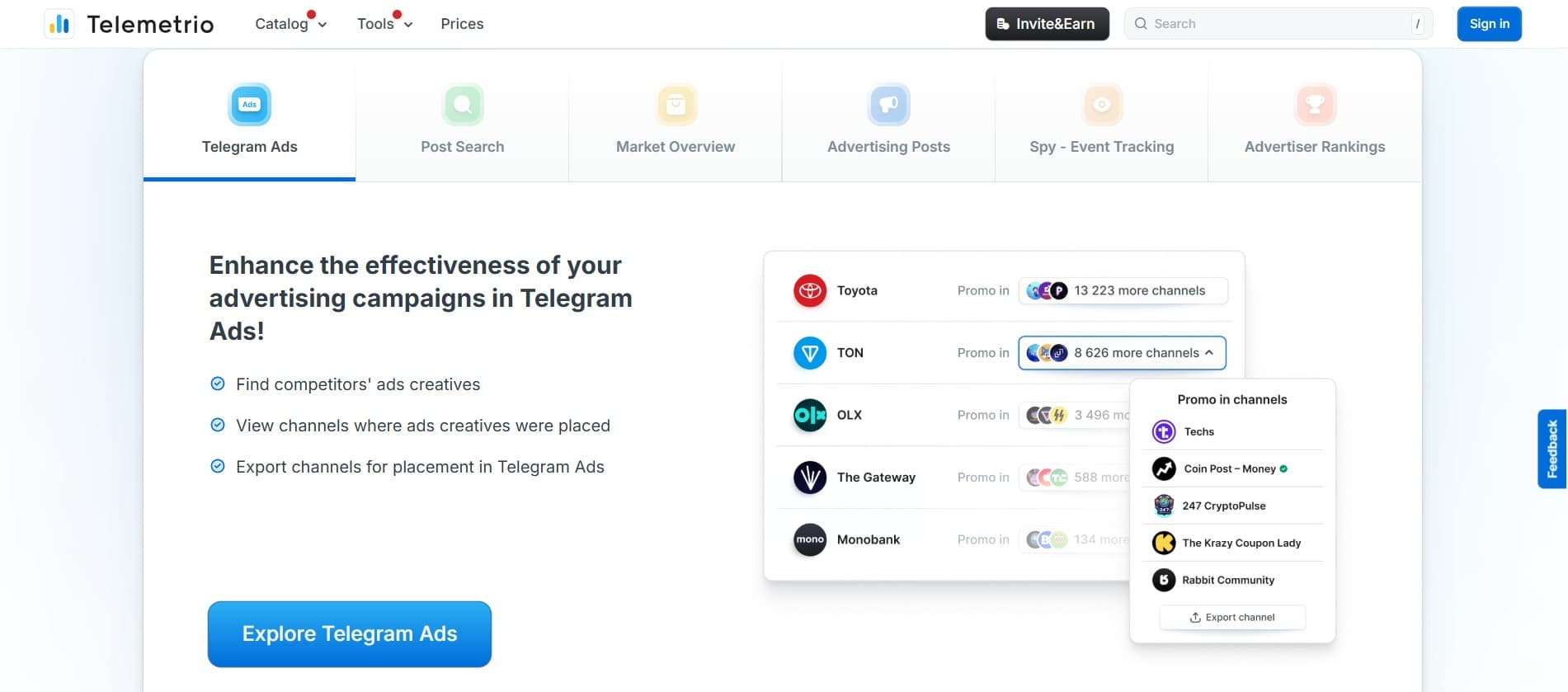
Telemetr is one of the most interesting tools in the category if your job is deeper research rather than simple reporting. Bellingcat’s 2026 toolkit description highlights country and category rankings, channel pages, ad-creative intelligence, post search, real-time keyword mentions, fraud-related signals such as a “Cheater Tag,” and API access. The platform’s own materials also emphasize channel search and analytics at scale.
- Data access model. Primarily public-content intelligence at scale, with optional channel-owner workflows through its bot and API. That makes it strong for research and ad-market intelligence, with some extra depth for verified or connected assets.
- Freshness and historical depth. Strong. Telemetr offers real-time event tracking and alerts, while historical depth varies by plan, from short windows on free tiers to much longer history on paid plans.
- Attribution capability. Moderate to strong inside Telegram. It is particularly good at tracing ad placements, advertiser activity, post search, mention sources, and campaign-like creative reuse, but it is still not a full downstream conversion platform.
- Anti-fraud signals. Strong relative to most Telegram research tools. Telemetr exposes a Cheater Tag, Ads Index, and related heuristics for suspicious or manipulated channel behavior, though the platform itself notes these are heuristics rather than perfect truth.
- Export/API readiness. Strong. Telemetr has REST API access, OpenAPI documentation, API-key workflows, and higher-tier export options including Excel.
- Privacy risk. Low for pure public research, but medium once you start issuing API keys or connecting a bot to owned channels. Its privacy policy also indicates support workflows may process channel-admin-related data.
- Support. Good. Telemetr publishes API docs and offers technical support and sales contacts via Telegram and email.
Best for:
- Media buyers who want more than surface metrics.
- Analysts tracing ad placements and channel networks.
- Teams monitoring keywords across public Telegram.
Telemetr is powerful, but it is not the easiest “starter” tool. It makes the most sense when Telegram is already an established acquisition or research channel for your team.
Combot
Combot is still one of the clearest picks for group analytics plus moderation. On its official site, it positions itself around moderation, analytics, anti-spam, triggers, scheduled announcements, and community management. It also reports significant scale: 190,000 active groups, 16 million active users, and 40 million daily messages.
- Data access model. Admin-based, in-group analytics and management. Combot is designed for communities you operate, not for broad public-market Telegram intelligence.
- Freshness and historical depth. Strong for active communities. Its API supports configurable time ranges, and the product is built around live moderation, analytics, and group operations rather than delayed monthly reporting.
- Attribution capability. Moderate. Combot supports referrals, invite links, join data, member activity, and moderation journals, which is useful for community attribution, but it is not a conversion-measurement system for off-platform outcomes.
- Anti-fraud signals. Strong. This is one of Combot’s biggest strengths thanks to CAS, spam protection, restriction policies, moderation logs, and anti-abuse workflows.
- Export/API readiness. Strong. Combot exposes a documented API with analytics, member data, referrals, moderation actions, invite-link stats, and even CSV export in some endpoints.
- Privacy risk. Medium to high. Combot requires admin-level access to your groups, and its API key is tied to your Telegram account and grants access to groups where you are an administrator.
- Support. Good. The product has official documentation, a support chat, and a news channel.
That tells you what Combot is really for: not polished channel charts, but the messy reality of running active communities.
Best for:
- Large public groups.
- Crypto, trading, gaming, and support communities.
- Teams that need analytics and moderation in one place.
What stands out:
- Analytics dashboard for group insights.
- Spam protection and restriction policies.
- Trigger-based automation.
- Scheduled and recurring announcements.
- Reputation and engagement features.
If your work is mostly channel sponsorship research or content benchmarking, Combot is the wrong primary tool.
TeleMe
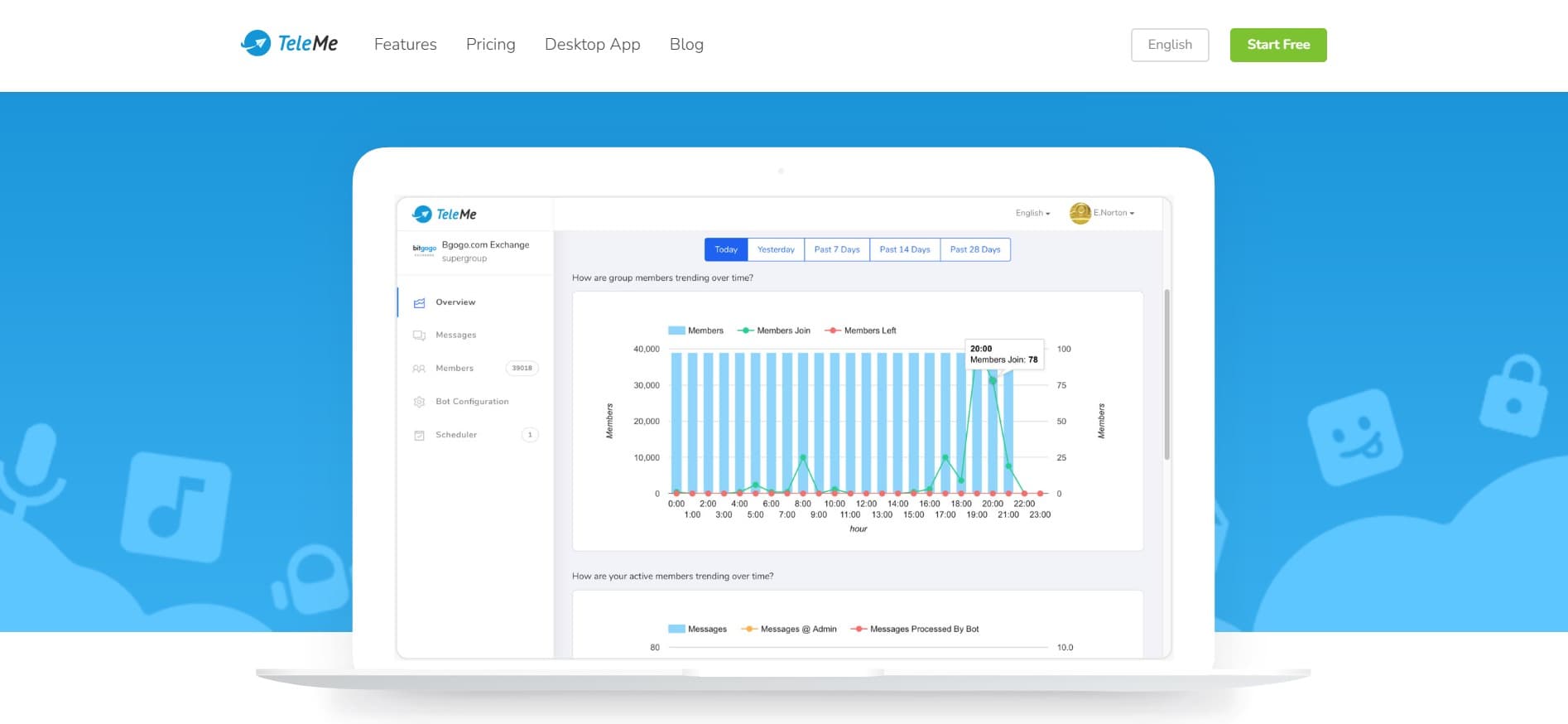
TeleMe is another strong group-first platform. Its official site describes group management, group analytics, team collaboration, member management, anti-spam, and scheduled task workflows. Its public materials position TeleMe as a group management and analytics bot for growing Telegram communities, with support for custom bots and enterprise-level assistance.
- Data access model. Admin- and bot-based group analytics and management. TeleMe is built for owned communities and moderator teams, not for public competitor intelligence.
- Freshness and historical depth. Strong for community operations. TeleMe advertises real-time insights and long reporting windows that scale by plan, up to 36 months of reports and 365 days of community history on enterprise tiers.
- Attribution capability. Moderate. It is strong on active-user reporting, member histories, rank lists, and operational community analytics, but it does not present itself as a click-to-conversion attribution tool.
- Anti-fraud signals. Moderate to strong. TeleMe includes offensive-message detection, message filtering, new-join restrictions, whitelist controls, and anti-spam workflows, which makes it useful for community hygiene.
- Export/API readiness. Moderate. Enterprise plans explicitly mention API integration, but public API materials are less exposed than with Combot or Telemetr.
- Privacy risk. Medium to high. TeleMe can host your bot, requires bot-token handling, and explicitly warns users to keep API tokens safe; that makes permission hygiene and credential management important.
- Support. Good. TeleMe offers dedicated support for enterprise customers and even a dedicated customer manager on higher plans.
Best for:
- Community teams that need member-level visibility.
- Projects with moderators working together in one system.
- Telegram groups that need both control and analytics.
TeleMe is excellent for owned groups, but it is not the tool you choose for broad public-market channel research.
LiveDune
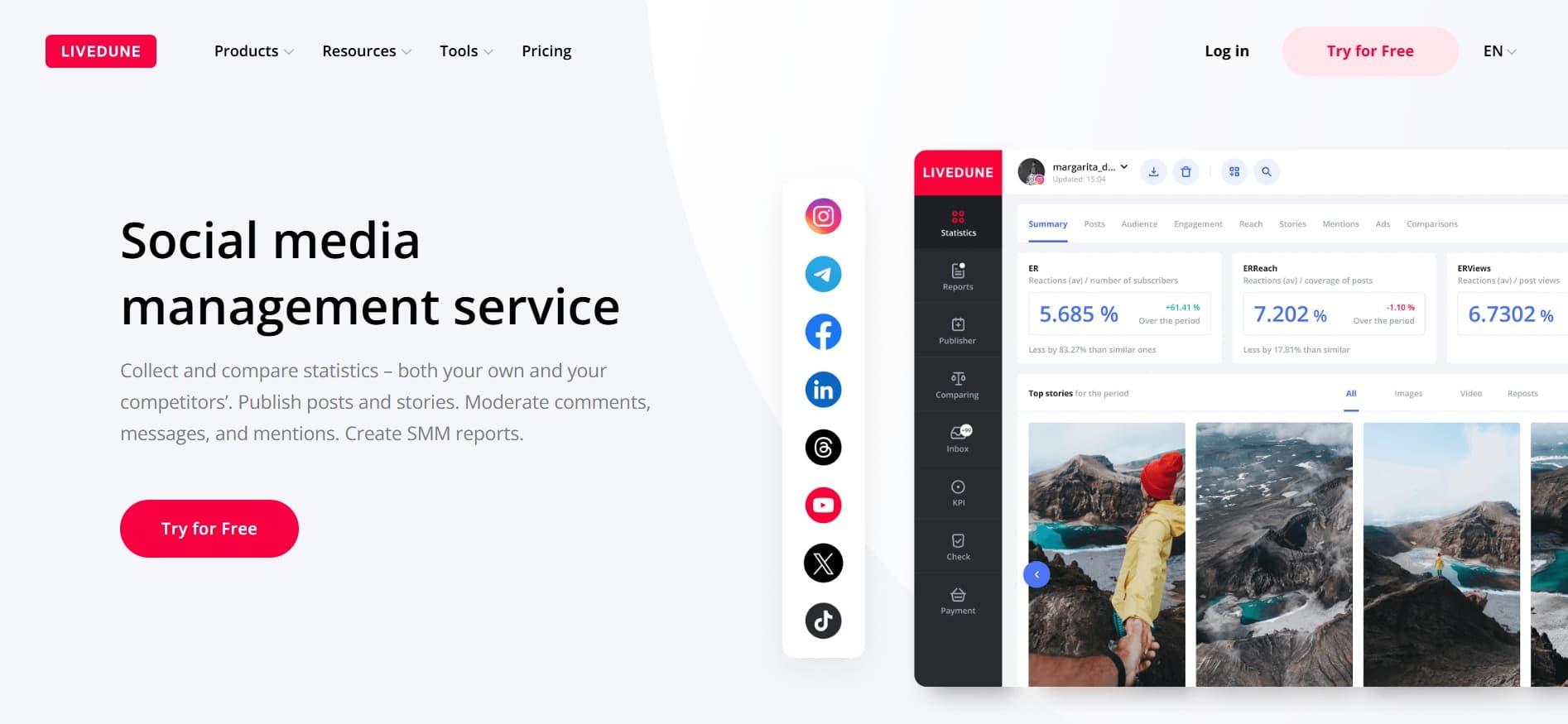
LiveDune is useful when Telegram is just one part of a broader social stack. Its help center documents account statistics, quick analysis for external accounts, KPI tracking for Telegram, comparison views, reporting, and comment monitoring.
At the same time, LiveDune is unusually transparent about Telegram data limits: for Telegram, some metrics are available differently depending on whether you analyze your own account or an external one. The platform supports Telegram-specific metrics such as ER and VR, while some reach-based metrics and deeper reporting are more limited for external accounts. Because of that, LiveDune is more useful for cross-platform reporting than for deep Telegram-only research.
That honesty is a strength, not a weakness.
- Data access model. Cross-platform analytics dashboard with Telegram support, but Telegram is handled differently from platforms with richer official data access. LiveDune states that Telegram channels are added as “others,” and Telegram statistics are the same for your own and other accounts.
- Freshness and historical depth. Moderate. Some Telegram-related metrics are calculated daily, and key widgets update on a daily schedule, while KPI tracking and comparisons support longer month-, quarter-, and year-based workflows.
- Attribution capability. Moderate. LiveDune is useful for post-level comparisons, comments, reposts, reactions, and KPI tracking, but Telegram metrics are available differently for owned and external accounts, which makes the platform more useful for reporting workflows than for deep Telegram-only research.
- Anti-fraud signals. Limited for Telegram. LiveDune has a verification module for fake followers in other networks, but its public Telegram materials do not position Telegram analytics as anti-fraud-centric.
- Export/API readiness. Strong. LiveDune offers comments export, comparison export, and API access for pulling connected account statistics into internal systems.
- Privacy risk. Low to moderate. LiveDune says it works through official APIs, and Telegram assets are handled as external-style accounts, which reduces some risk compared with deep admin-bot tools; still, broader connected workflows always require access discipline.
- Support. Strong. LiveDune documents support through website chat, a Telegram support bot, and email.
Best for:
- Agencies and in-house teams working across several social platforms.
- Reporting to clients or management.
- KPI-based content teams that need Telegram inside a broader social reporting workflow.
LiveDune is less specialized than TGStat or Telemetr for deep Telegram-only intelligence, but it can be a strong choice for teams that manage Telegram alongside other social platforms and need unified reporting.
Popsters
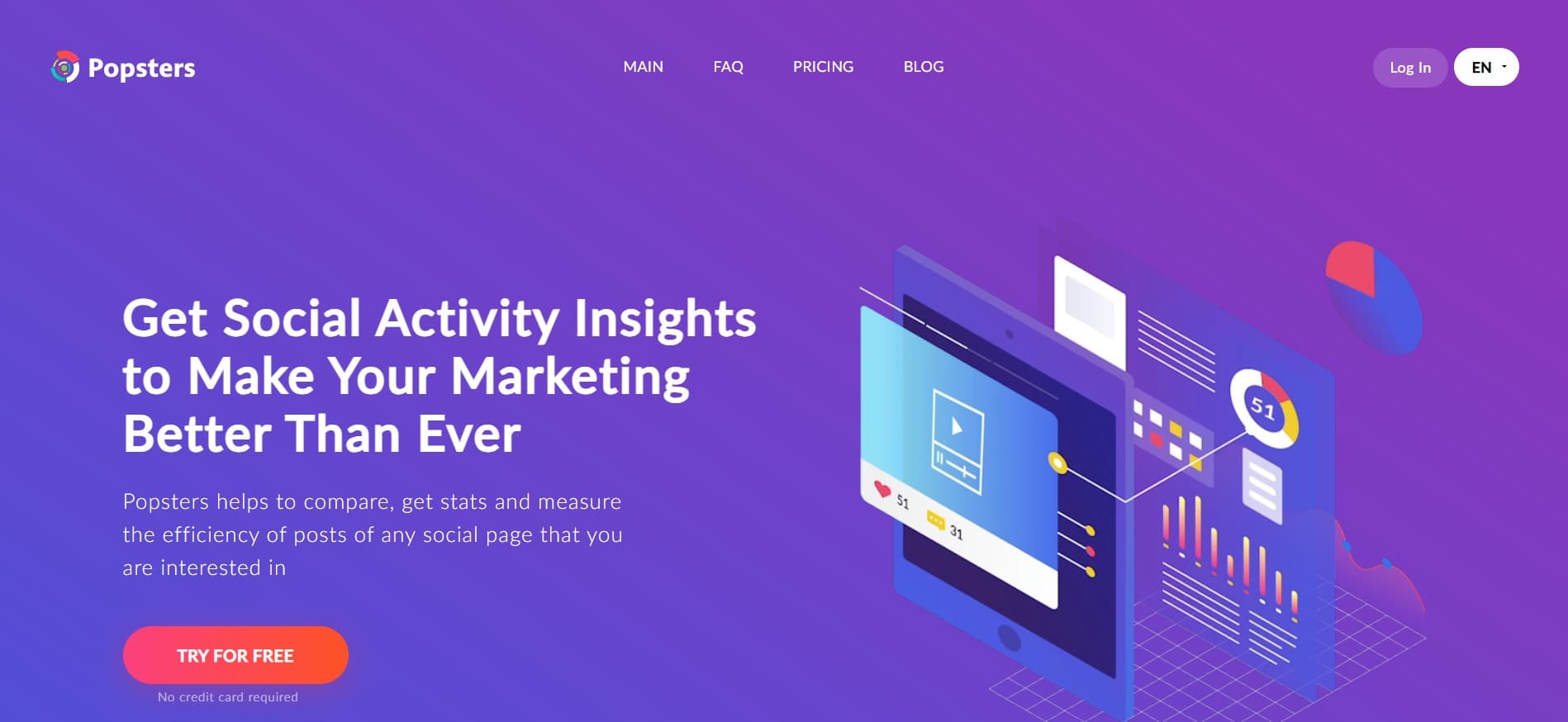
Popsters is a practical content-analysis tool for public Telegram channels. Its Telegram page emphasizes competitor analysis, report generation, and comparison of up to 10 channels at once without administrator access. That is useful when your main question is, “What content patterns actually win in this niche?”
- Data access model. Public-channel benchmarking without administrator access. That makes Popsters easy to use for competitor content analysis and low-friction comparisons.
- Freshness and historical depth. Moderate. Popsters is well positioned for comparative content analysis and reporting, but its Telegram materials emphasize snapshots, comparisons, and efficiency analysis more than real-time monitoring or deep operational history.
- Attribution capability. Low. Popsters focuses on engagement patterns, content formats, posting times, hashtags, and comparisons, not click tracking, join attribution, or downstream conversion measurement.
- Anti-fraud signals. Weak. On its Telegram product pages, Popsters does not surface dedicated bot-risk flags, anomaly detection, or explicit anti-fraud tooling.
- Export/API readiness. Moderate for exports and weak for automation. It supports PDF, XLSX, and PPTX report exports, but its public Telegram-facing materials do not foreground a developer API.
- Privacy risk. Low. Because it works without administrator access, Popsters is one of the lower-friction tools in this set from a permissions standpoint.
- Support. Moderate. The site includes FAQ, pricing, trial access, and an explainer video, but it presents a lighter support and documentation footprint than more enterprise-oriented platforms.
Best for:
- Content benchmarking.
- Headline and format analysis.
- Comparing several channels quickly before planning a content calendar.
Popsters is about content performance, not moderation, retention workflows, or deep member analytics.
Brand24
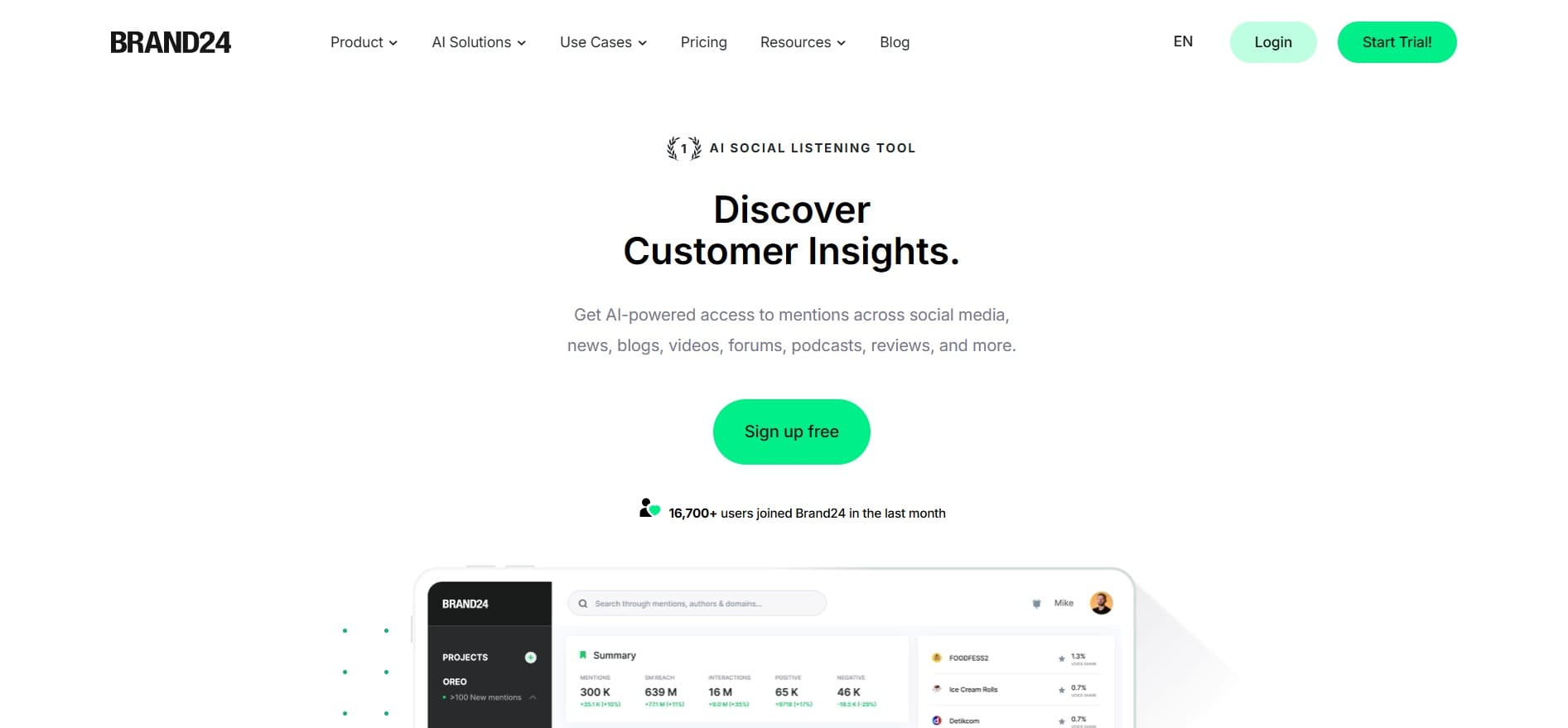
Brand24 deserves a place on this list, but only if we are precise about what it is. It is not a classic Telegram channel analytics platform. It is a social listening and media monitoring tool that now tracks public Telegram conversations and mentions, with sentiment analysis, alerts, and trend detection. Brand24’s own 2026 roundup is candid about that distinction, and its product pages emphasize monitoring across 25 million online sources, sentiment analysis, and real-time tracking.
- Data access model. Public-source monitoring rather than classic Telegram channel analytics. For Telegram specifically, Brand24 tracks public channels and chats, and lets users add channels to monitor inside a broader social-listening workflow.
- Freshness and historical depth. Strong for monitoring workflows. Brand24 tracks online mentions in real time and adds anomaly/event detection plus period-comparison analysis.
- Attribution capability. Low to moderate. It is strong for mention volume, reach, sentiment, comparison, and presence analysis, but it is not a click-, join-, or conversion-attribution tool for Telegram campaigns.
- Anti-fraud signals. Moderate. Brand24 can detect unusual spikes and filter noise through event detection and smart filtering, but this is reputation monitoring and anomaly detection, not Telegram-native audience-quality scoring.
- Export/API readiness. Strong for exports and connectors. Brand24 supports Excel, PPTX, PDF, and other report workflows, plus integrations with tools like Slack and Microsoft Teams.
- Privacy risk. Low to moderate for Telegram monitoring itself, because Brand24’s Telegram tracking is based on public channels and chats; risk rises when teams add broader integrations and connected environments.
- Support. Strong. Brand24 has a large help center, integrations documentation, and structured reporting guides.
Best for:
- Reputation management.
- PR teams.
- Competitive mention monitoring.
- Brands that care about what Telegram says about them, not only how their own channel performs.
Brand24 will not replace TGStat, Telemetr, or native channel analytics if your goal is subscriber-growth intelligence or post-by-post channel evaluation.
Metricgram (bonus pick)
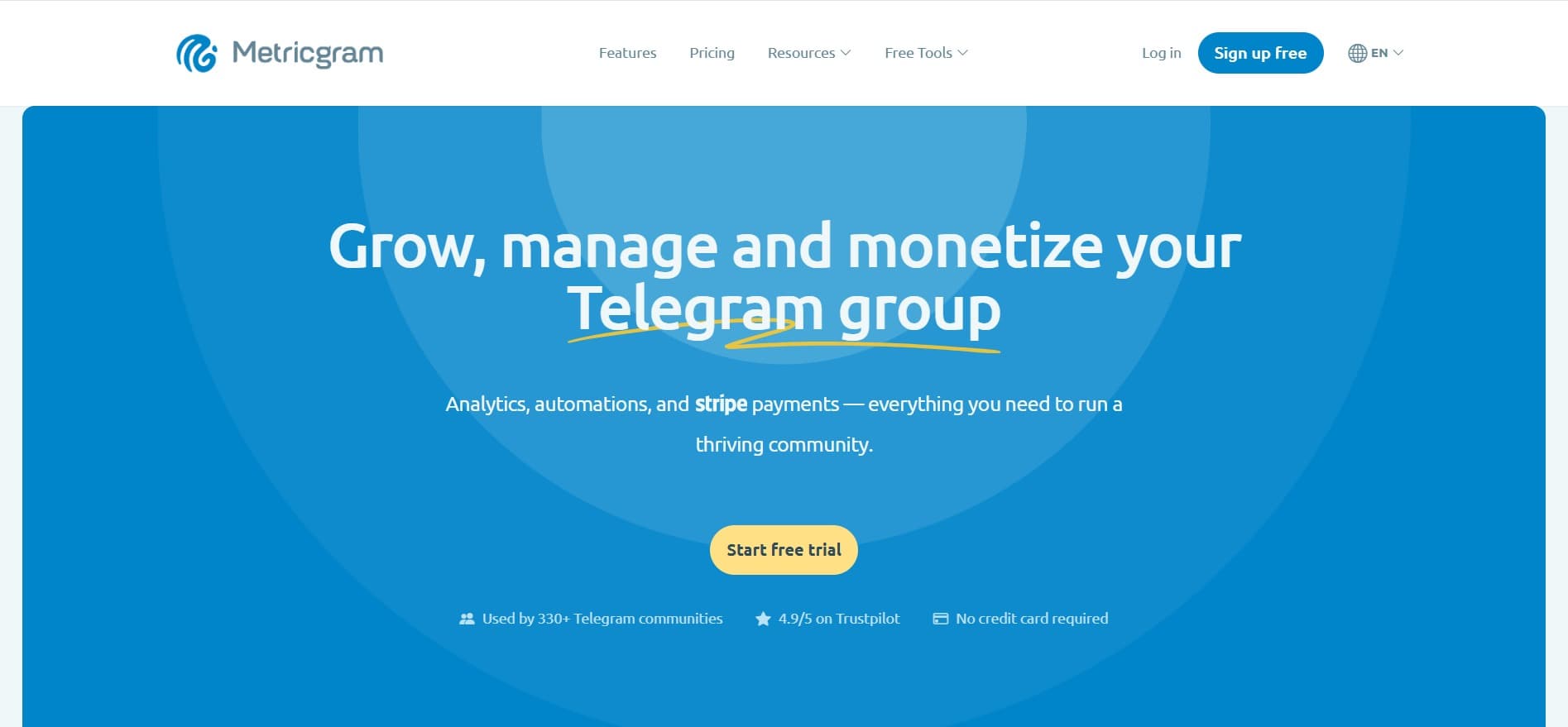
Metricgram is not as universally known as TGStat or Combot, but it is increasingly relevant for private-group operations. Its official site highlights a dashboard with total messages, active users, most active users, reactions, date filtering, daily reports, summaries, invite-source tracking, analytics history, gamification, and Stripe-based access control.
- Data access model. Admin- and bot-based group platform with analytics, automation, member management, and Stripe-based monetization workflows. It is built for owned communities, especially paid or operationally active groups.
- Freshness and historical depth. Strong for community management. Metricgram emphasizes real-time analytics, daily reports, summaries, invite tracking, and longer analytics history on higher plans.
- Attribution capability. Good for Telegram-native growth attribution. Invite source tracking, referral-style invite workflows, and Stripe-linked access automation make it more attribution-aware than most group tools, though it still is not a full downstream conversion suite.
- Anti-fraud signals. Moderate. Metricgram includes anti-spam protection, moderation rules, and member management, but it does not publicly position itself around advanced fraud scoring the way a research-heavy tool might.
- Export/API readiness. Moderate. Metricgram clearly supports exports, reports, and data-export workflows, but I did not see a prominently surfaced public API in the materials reviewed.
- Privacy risk. Medium to high. You must link your Telegram account, be a group admin, and approve bot permissions before stats and automations become available.
- Support. Good for SMB and community operators. Metricgram provides a help center, troubleshooting materials, export guidance, and dedicated support on higher tiers.
Best for:
- Paid communities.
- Groups with subscription access.
- Operators who want analytics plus automation in one place.
It is more of an operations-and-growth tool for owned groups than a market-wide Telegram intelligence platform.
Which Tool Should You Choose?
|
Your situation |
Best primary choice |
Why |
What to add second |
|
You run your own channel and need clean first-party stats |
Telegram native analytics |
It is the closest thing to a source of truth for your own posts, growth, shares, and source graphs |
Add Popsters or LiveDune for content benchmarking/reporting |
|
You buy ads in public Telegram channels |
TGStat or Telemetr |
Both are strong for public-channel intelligence, rankings, mentions, and ad research |
Add native analytics on your own side to validate landing performance |
|
You run a big Telegram group |
Combot or TeleMe |
Both focus on moderation plus community analytics rather than vanity metrics |
Add Metricgram if subscriptions or monetized access matter |
|
You manage Telegram inside a multi-platform social team |
LiveDune |
KPI tracking, comparison, reports, and broader social workflow support |
Add TGStat for Telegram-specific public research |
|
You need to understand what Telegram says about your brand |
Brand24 |
Mention monitoring, sentiment, alerts, trend analysis |
Add TGStat or Telemetr for channel-level context |
|
You mainly want to study what content formats work |
Popsters |
Fast comparison of multiple public channels without admin access |
Add native analytics for your own owned-channel truth |
What Metrics Actually Matter On Telegram
A lot of teams still obsess over subscriber count. That is a mistake.
In my experience, subscriber count is one of the most overrated metrics on Telegram. I pay much more attention to view consistency, growth sources, repost behavior, and signs of artificial inflation.
Sara Al MansooriAdTech Strategist at MangoAds.
Here are the metrics that usually matter more:
- Views per post. A channel with a smaller audience but stronger view depth may outperform a larger one for sponsorships or owned media.
- Shares and forwards. These reveal whether content travels beyond the initial subscriber base. Telegram’s own stats and API expose shares-per-post style metrics.
- Source of growth. Not all subscriber growth is equal. Native Telegram source graphs, plus public-market tools such as TGStat and Telemetr, help you distinguish organic discovery from promotion-driven spikes.
- Citation or mention signals. In Telegram, network effects matter. Citation-style metrics and keyword monitoring often reveal more about influence than raw size.
- Community activity, not just audience size. In groups, message volume, active users, response patterns, and moderation events are the real health metrics.
When these metrics are tied to buying decisions, the real question becomes CPM vs CPC in Telegram advertising, not just raw channel size.
Where MangoAds Fits in This Stack
MangoAds should not be framed as a primary Telegram analytics tool, because that is not its main job. It is better understood as a Telegram advertising platform for campaign management and channel monetization.
For advertisers, we help run ad campaigns across Telegram channels, with targeting by category, GEO, and language, and dashboard-level tracking for views, clicks, CTR, CPC, and CPM.
For channel owners, we offer automated monetization with configurable ad frequency, category exclusions, and real-time earnings visibility. We also use an anti-fraud system designed to detect suspicious traffic and protect impression quality.
That makes MangoAds useful next to analytics tools, not instead of them. A practical workflow looks like this:
- Use Telegram native analytics to understand your own content performance.
- Use TGStat or Telemetr to shortlist channels and study the market.
- Use Brand24 if brand mentions and sentiment matter.
- Use MangoAds when you are ready to activate Telegram media buying or monetize channel inventory through a more structured CPM workflow.
You might be interested in our article "How to Run Telegram Ads in 2026"
Final Verdict
The main takeaway is simple - Telegram analytics is not one software category, but several adjacent ones. Some tools are built for channel research, some for community operations, some for brand monitoring, and some for cross-platform reporting. That is why this article does not treat them as direct one-to-one substitutes: the best choice depends first on the job you need to do.
So instead of asking which platform is best in absolute terms, it is more useful to ask which one is best for your workflow. The shortlist below is the most practical way to think about the category in 2026:
- Best first-party analytics for your own channel - Telegram native analytics.
- Best public-channel research tool - TGStat.
- Best deeper market and ad-intelligence option - Telemetr.
- Best for large groups and moderation - Combot.
- Best for group management with member-level visibility - TeleMe.
- Best for reporting across Telegram and other social platforms - LiveDune.
- Best for content benchmarking - Popsters.
- Best for reputation and mention monitoring - Brand24.
- Best for automated Telegram advertising - MangoAds.